Funding Needed

Current status: External charitable, grant, or sponsorship support is required before implementation can proceed. This is not an active or open-enrollment program.

STROKE NEUROMUSCULAR RECOVERY

A coordinated pathway for recovery after stroke.

A developing program helping stroke survivors and caregivers navigate rehabilitation education, community resources, qualified partnerships, and long-term functional support.

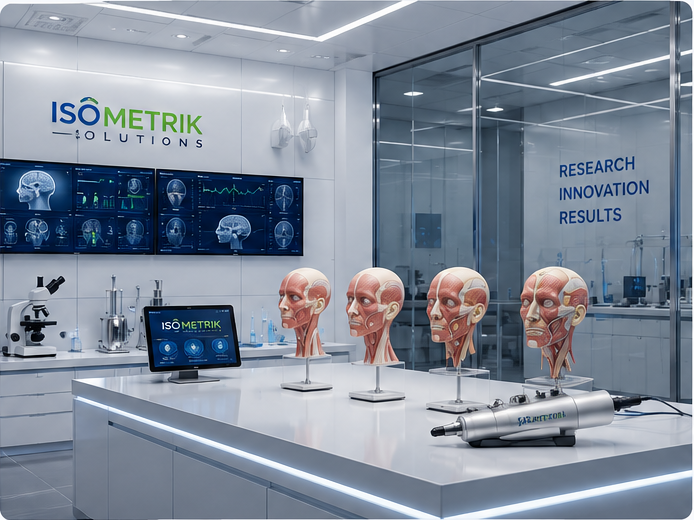
Rehabilitation research and innovation

PROGRAM PURPOSE

Why this program matters.

Stroke can affect strength, coordination, balance, facial movement, speech, swallowing, cognition, endurance, and independence. Recovery often continues beyond the initial hospital stay.

The program is designed to reduce gaps between acute care, outpatient rehabilitation, home practice, caregiver support, and community participation.

WHO IT SERVES

Participants and communities.

  • Stroke survivors transitioning from hospital or inpatient rehabilitation
  • People receiving outpatient, home-health, or community-based rehabilitation
  • Individuals experiencing facial, upper-body, balance, mobility, speech, or oral-motor challenges
  • Family members and unpaid caregivers
  • Rehabilitation clinicians, students, clinics, hospitals, and community organizations

PROGRAM SERVICES

Education, access, and coordinated support.

Recovery education

Accessible information about rehabilitation roles, realistic recovery planning, home safety, and long-term participation.

Care transition support

Navigation resources that help connect hospital discharge, outpatient services, community care, and follow-up.

Caregiver preparation

Practical education on communication, safe assistance, adherence, fatigue, and caregiver well-being.

Community access

Partnerships addressing transportation, cost, digital access, health literacy, and local rehabilitation resources.

Professional learning

Interdisciplinary education on continuity, functional outcomes, caregiver engagement, and patient-centered planning.

Outcomes initiatives

Programs and studies tracking access, engagement, functional progress, experience, and quality of life.

PROGRAM OBJECTIVES

What the program is designed to accomplish.

  1. 1

    Improve continuity across stroke recovery settings.

  2. 2

    Help survivors and caregivers understand the rehabilitation pathway.

  3. 3

    Reduce financial, geographic, transportation, and information barriers.

  4. 4

    Support functional independence and community participation.

  5. 5

    Strengthen collaboration among clinical and community partners.

MEASURING IMPACT

Meaningful and responsible outcomes.

Measures will be selected by qualified program and clinical partners and matched to the activity, participant, and stage of recovery.

Successful connection to rehabilitation and community resources

Caregiver preparedness and confidence

Participation, attendance, and program completion

Appropriate mobility, balance, communication, oral-motor, or daily-function measures

Hospital-to-community continuity indicators

Quality of life and participant experience

PARTNERSHIP MODEL

Built through qualified collaboration.

  • Stroke centers and rehabilitation hospitals
  • Physical, occupational, and speech therapy providers
  • Neurologists, physiatrists, nurses, social workers, and care coordinators
  • Universities and stroke research programs
  • Community centers, faith organizations, and survivor support groups

SAFETY & SCOPE

Clear boundaries protect participants.

  • Program information is educational and does not replace medical diagnosis, emergency care, or individualized treatment.
  • Clinical services must be delivered or supervised by appropriately licensed and qualified professionals.
  • Participation, exercise, referral, and research eligibility will be determined individually using applicable safety and ethical standards.
  • Human-subject research requires appropriate review, informed consent, privacy protection, and transparent communication of risks and limitations.
  • Any sudden or worsening stroke symptoms require immediate emergency evaluation; this program is not an emergency service.

PROGRAM INFORMATION

Connect with the Institute.

Patients, caregivers, clinicians, researchers, hospitals, clinics, universities, nonprofits, and community organizations may contact us to discuss participation, referrals, sponsorship, research, or partnership opportunities.

Status & operations

What is established—and what remains open

The Institute is publishing these operational fields so visitors can distinguish funding development from established delivery.

Program lead
Not yet appointed; seeking a qualified institutional and/or clinical lead with relevant stroke-recovery expertise.
Launch date
Not scheduled. Launch depends on adequate funding, confirmed leadership and partners, operational readiness, and any required review.
Location
Potential qualified U.S. hospital, rehabilitation, or community partner sites. No delivery site is confirmed.
Eligibility
Future eligibility may include appropriately screened stroke survivors whose clinical teams determine the program is suitable. Applications, referrals, and enrollment are not currently open.
Partner requirements
Qualified hospitals, rehabilitation centers, universities, healthcare systems, or community organizations with stroke expertise, referral pathways, safety protocols, and outcome-measurement capacity.
Funding requirement
External charitable, grant, or sponsorship support is required. The amount will be published after scope and budget approval.
Participation pathway
Prospective funders and institutions may contact the Institute. An individual referral or enrollment pathway will be published only after funding, clinical governance, eligibility, and safety processes are approved.
Intended outcomes
Support functional recovery, interdisciplinary education, access to responsible recovery resources, and measurable participant and program outcomes.
Contact person
No individual program contact has been appointed. Interim contact: ISO Metrik Institute Program Development Office at info@isometrikinstitute.org or (678) 632-3735.

Transparency note: Funding Needed does not mean the program is active, recruiting, or accepting enrollment. Contributions support development and do not guarantee launch.